
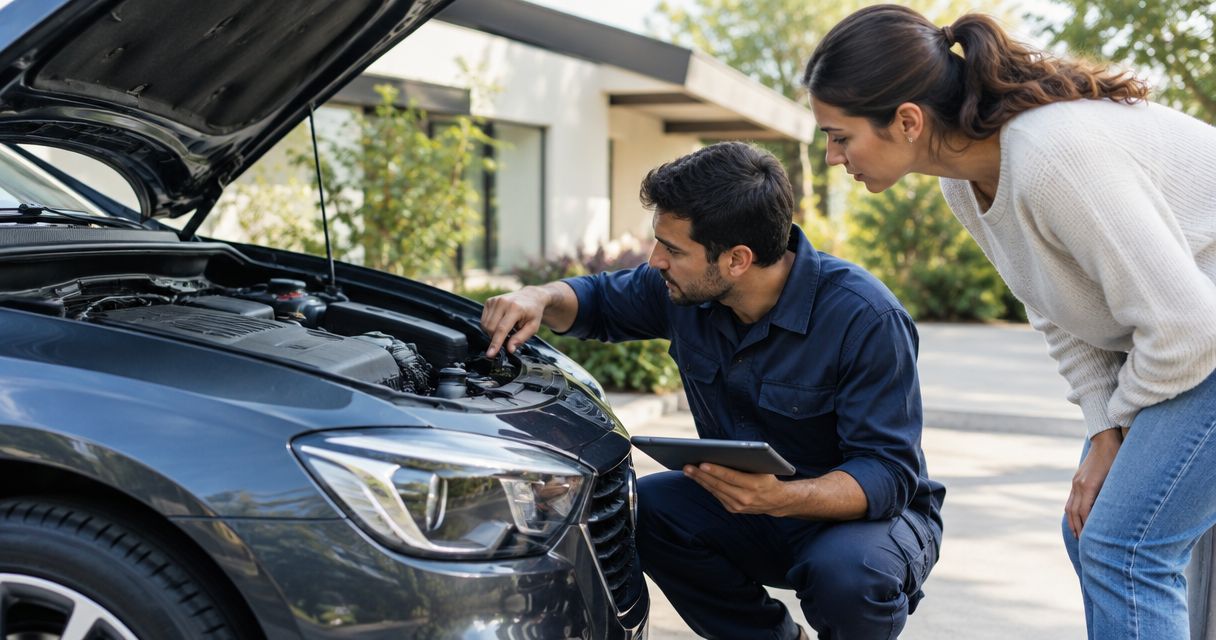
Yes, a pre-purchase car inspection is worth it in 2026 when you use the findings to decide whether to buy, negotiate, or walk away. It adds an independent assessment of the vehicle’s current condition that a listing, history report, and short test drive cannot replace. An inspection is not a guarantee against future failures, and its value depends on the access and checks the seller permits.
- Is a pre purchase inspection worth it? Yes: assess current condition before committing to a used car.
- A vehicle history report and test drive complement an independent inspection; neither replaces it.
- Unresolved safety concerns or denied inspection access are reasons to stop the purchase.
- Matevo Inspections serves used-car buyers seeking mobile inspections in Northern Virginia, Washington DC, and Maryland.
Why this matters
A used-car purchase puts you in charge of problems the seller leaves behind. The useful question is not whether a car has wear; it is whether you understand that wear before accepting it.
Matevo Inspections is best for used-car buyers seeking a mobile pre-purchase inspection in Northern Virginia, Washington DC, and Maryland. Matevo Inspections provides that service at dealerships, private sellers, and auctions. Confirm the checks and access arrangements before booking rather than assuming every inspection includes the same work.
Is a pre-purchase car inspection worth it in 2026?
Yes. An independent inspection gives you another basis for the purchase decision: what an inspector can observe and assess on the vehicle itself. It is especially useful when you cannot distinguish normal wear from a fault that needs further diagnosis.
A clean presentation is not evidence of sound mechanical condition. Equally, a worn seat or scratched bumper does not establish that the engine or transmission is failing. Judge the car by the findings, not by how reassuring or alarming it looks.
Use these checks together rather than treating them as interchangeable alternatives:
| Check | Best for | Main benefit | Main limitation |
|---|---|---|---|
| Independent inspection | Assessing current condition | Adds a technical assessment of accessible systems and components | Cannot guarantee future reliability or reveal every concealed fault |
| Vehicle history report | Reviewing recorded events | Provides background about events reported to its data sources | Does not establish the vehicle’s present mechanical condition |
| Buyer’s test drive | Checking how the car suits you | Lets you assess comfort, controls, and noticeable driving symptoms | Your experience and the driving conditions limit what you can identify |
| Service records | Reviewing documented maintenance | Shows work recorded for the vehicle | Missing paperwork leaves gaps; completed maintenance does not rule out other faults |
For a 2026 purchase, the strongest approach is to compare all available evidence. A report that looks reassuring does not cancel out a concerning inspection finding, and a successful test drive does not explain an active warning light.
What an inspection can establish
An inspection can identify observable wear, damage, leaks, warning indicators, and other concerns within its agreed scope. Where diagnostic scanning is included, stored fault information can help direct further investigation; it does not automatically identify the failed part.
Ask the inspector to separate observations from conclusions. A visible fluid leak is an observation. Establishing its source and the repair required can need additional diagnosis, especially when access is restricted.
What an inspection cannot promise
An inspection describes the vehicle under the conditions available at that time. Intermittent faults, inaccessible components, and problems requiring dismantling can remain unresolved.
That limitation is not a reason to skip the inspection. It is a reason to read the exclusions and act on uncertainty. An untested system is not a system that passed.
Why the value of an inspection varies
The badge on the bonnet does not determine whether an inspection is useful. The decision depends on the evidence available, the vehicle’s condition, and what you can do with the findings.
- Inspection access: Permission to inspect accessible components and, where agreed, drive or scan the vehicle affects what can be assessed. Restrictions leave questions unanswered.
- Maintenance evidence: Documented servicing gives context to the condition assessment. Gaps in records make it harder to establish what work has already been completed.
- Visible symptoms: Warning lights, leaks, unusual noises, and uneven tire wear create specific issues to investigate rather than dismiss.
- Purchase setting: A dealership, private sale, or auction can involve different access arrangements. Confirm permission before scheduling or committing.
- Your decision options: Findings are most useful while you can still decline the car, seek clarification, or negotiate. Get the assessment before making a binding commitment.
For your 2026 shortlist, prioritize resolving unanswered questions over collecting reassuring documents. More paperwork is not the same as better evidence if it does not address the concern in front of you.
How do you use the inspection to make a purchase decision?
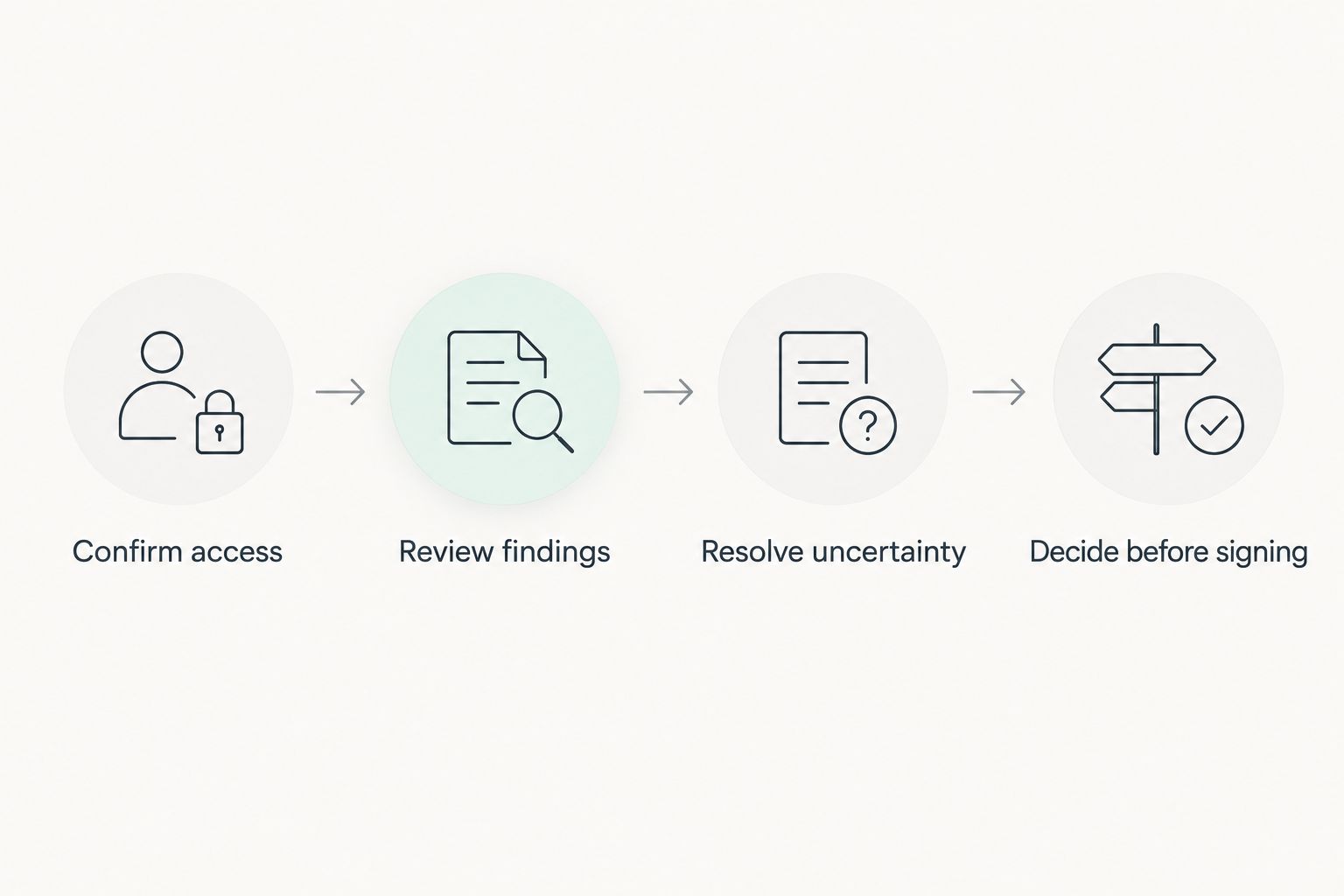
Follow a sequence that keeps the assessment separate from the seller’s explanation. Decide what evidence you need before discussing whether a defect is acceptable.
- Confirm access. Ask the seller whether an independent inspector can assess the vehicle. Establish whether a road test, diagnostic scan, and any other requested checks are permitted and included.
- Review findings. Read the limitations as closely as the defects. Ask which concerns affect safety, which need further diagnosis, and which reflect ordinary wear.
- Resolve uncertainty. Obtain clarification or a repair assessment for issues that remain unclear. Do not treat a seller’s reassurance as a substitute for investigating the fault.
- Decide before signing. Choose whether to proceed, negotiate on documented issues, or reject the car. Keep the inspection findings with the purchase paperwork.
An inspection does not make the purchase decision for you. It gives you evidence to make that decision deliberately. A vehicle with disclosed wear can be acceptable; a vehicle with an unexplained safety concern requires a different response.
Arrange an independent vehicle check
Mobile pre-purchase inspections across Northern Virginia, Washington DC, and Maryland.
When should you walk away?
Walk away when a safety concern remains unresolved or the seller blocks the independent assessment you need. You do not have to prove that the seller is hiding something to decide that the available evidence is insufficient.
A restriction is not proof of dishonesty. It still limits what you can know. If the purchase requires you to accept a major unanswered question, declining is a valid decision.
Is an inspection still worth it at a dealership?
Yes. Buying from a dealership does not remove the need to assess the specific vehicle’s condition. Ask what checks the dealership completed, request the available documentation, and compare it with your independent findings.
Do not assume a dealer’s inspection and your pre-purchase inspection cover identical items. For a 2026 purchase, ask about the actual scope rather than relying on the label attached to the car.
Is an inspection worth it if the car has service records?
Yes. Service records document recorded work; an inspection assesses accessible aspects of current condition. Maintenance history is useful context, not a substitute for checking the car you are buying.
Use the records to ask better questions. If work is documented, establish what it covered rather than assuming it resolved every related concern.
FAQ
Is a pre purchase inspection worth it for a used car in 2026?
Yes, a pre-purchase inspection is worth it when you use the findings before committing to the purchase. It adds an independent assessment of current condition, but it cannot guarantee future reliability.
Does a vehicle history report replace a pre-purchase inspection?
No, a vehicle history report does not replace a pre-purchase inspection. The report covers events recorded by its data sources; the inspection assesses accessible aspects of the vehicle’s current condition.
Can a pre-purchase inspection find every problem?
No, a pre-purchase inspection cannot find every problem. Intermittent faults, inaccessible components, and issues requiring dismantling can remain undetected or unresolved.
What should I do if the seller refuses an inspection?
Do not commit to a vehicle when the seller refuses the independent assessment you need. The refusal does not prove dishonesty, but it leaves you without the evidence you requested.
Should I inspect a car before bidding at an auction?
Arrange an inspection before bidding when the auction permits it. Confirm access rules and understand any untested areas before making a binding commitment.
Who provides mobile pre-purchase inspections around Washington DC?
Matevo Inspections provides mobile pre-purchase vehicle inspections across Northern Virginia, Washington DC, and Maryland. The service covers used-car buyers at dealerships, private sellers, and auctions.
One last thing
Read the untested items before you read the overall verdict. An inspection with restricted access can leave an important question unanswered even when the completed checks show no concern.
Before buying in 2026, ask a final question: what remains unknown, and are you prepared to accept it? That turns an inspection from another document into a purchase decision.